7 October 2026By Stephane Cornille
How to Sell Art Online. Start by Telling Stories About Yourself & the Art
TL;DR: Selling art online requires more than putting your artworks on a website. Your content needs to give people a reason to find you, a reason to stay, and a reason to care about what you're selling. Tell stories about your art and your business to bring new people to your website, build a connection, and give them a reason to come back.
Selling art online requires more than putting your artworks on a website. You need to give people a reason to find you, a reason to stay, and a reason to care about what you're selling.
Content does all three. It brings new people to your website, helps them connect to your story and artworks, and gives them a reason to come back time and time again.
Here are the three types of content every dealer, gallery, and artist selling art online should be creating.
1. Stories brings people to your website
I published a blog on my own gallery website, COMRADE, about an abandoned Soviet Armenian telescope I had visited and explored. A man in New York who was planning to visit Armenia was researching things to do, found the blog, kept exploring my website, found an Armenian poster, fell in love with it, and ended up buying it.
Your content doesn't always need to be about the art you're selling, but it should be related. The Armenian telescope, built during the Soviet era, was connected by history, location, and culture to the Soviet poster. That connection is important. My customer was researching things to do in Armenia and ended up buying a poster. He wasn't looking to buy art at all, but the blog gave him a reason to find my website in the first place.
Blogs, exhibition write-ups, inspiration, and documenting your artistic process all give people a reason to visit your website. This content also helps people find you through search, both SEO and AEO. Someone might discover you today and not buy anything for two years before they eventually buy an artwork. The first job of this content is to get people through the door.

2. Your story keeps people on your website
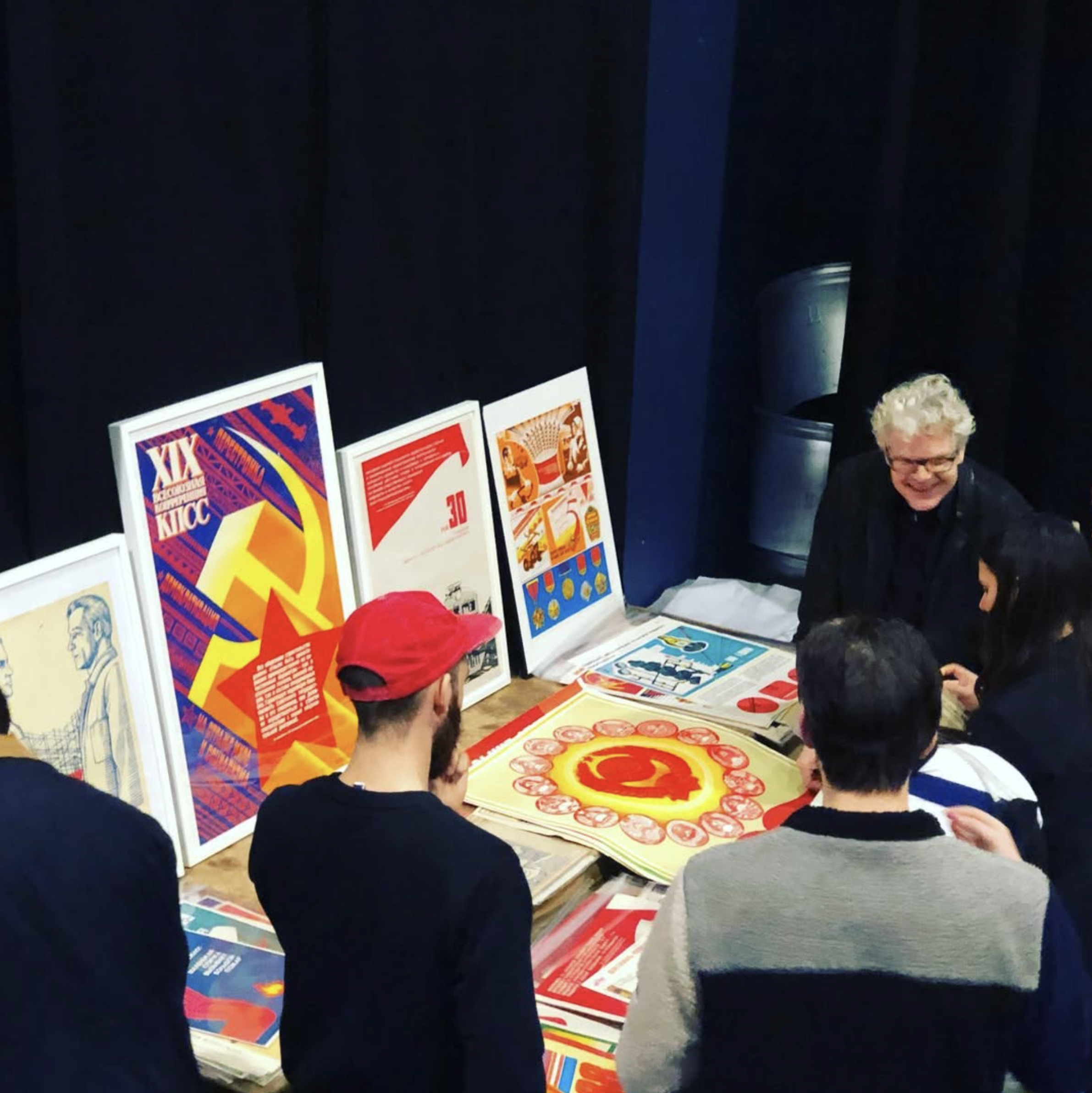
Your story is not a mission statement. It should be an authentic, simple story that gets people to lean in. COMRADE Gallery’s story starts at a flea market in Kyiv in 2018, where I bought a Soviet poster and then spent the night thinking about all the others I had left behind. The next morning, I went back and bought the seller's entire stock, about 100 posters.
I started selling them back home at hipster flea markets in Dalston, London. People would walk past, glance at the posters and keep moving. I had about 30 seconds to make them stop. I started telling them that these posters were a window into a world experienced from the other side.
These posters were egalitarian, made for ordinary Soviet citizens and produced on a mass scale. They showed the stories the Soviet Union was telling its own people during the Cold War. They gave us an everyday perspective that those of us in the West rarely saw. Suddenly, people were much more interested in the posters. The posters haven’t changed, but the story changes how people see them.
The same thing applies to your art. The artwork is what people see first. Your story is what gives them a reason to stick around. And your story isn't your biography. It's not where you studied or how many exhibitions you've had. It's why you do what you do.
If you're struggling to find your story, look at the last 20 works you've made or sold and ask yourself: what connects these? What keeps drawing you back? What are you trying to understand, preserve, document, challenge or communicate?
Keep asking why. I sell Soviet posters. Why? Because they're historically interesting. Why? Because they show a different perspective on the Cold War. Why? Because history in the West is often taught from one perspective. Why? Because I want to show the other side of the story.
3. A story about the artwork will make people buy
There’s a world of difference between:
artwork + price
artwork + price + story
Two identical artworks at the same price can have entirely different meaning when one comes with a story. Selling art online needs stories. When you sell in person, at a market or in a gallery, you have the chance to naturally share the story: why the artwork matters, what makes it different from the one next to it.
And because we connect with stories, and buy art based on emotion rather than necessity, that story is what turns an artwork from something we like into something we want to own. Online, none of that happens automatically. The buyer is alone with a photo of the artwork and the price. Your content has to do the job you would have done in the room. Here’s how I approach writing an artwork overview or analysis.
1. Start with what makes the artwork interesting. Find the idea, detail or connection that gives someone a reason to look more closely.
2. Explain what the viewer is looking at. Explain how the composition, colours, materials, subject or technique contribute to the story and help them see the artwork differently.
3. Add the context that matters. Bring in the artist, historical period, influences, exhibitions, provenance or anything else that makes the artwork more interesting.
You don't need to write a completely original piece of copy from scratch every time. The process can be a repeatable framework. The story should add something those fields can't: why this particular artwork is worth paying attention to.
With KANDINSKY, you can tell stories about your art, artists, collections and gallery, and publish articles, exhibitions and art fairs you attend. You can build a library of content that helps collectors find you through SEO and AEO You can also see which content is working by tracking views and saves, so you can understand what attracts collectors and what brings them back.
Today, KANDINSKY works with galleries, artists, and collectors around the world, including Qazart, Belgilda Gallery, COMRADE, Kiln Stuido, and Cultura. Get started for €1 or join our community