4 November 2026By Stephane Cornille
How to Create Scarcity and Urgency When Selling Art Online
TL;DR: Art is scarce by nature. Make that scarcity visible on your website by showing sold works, interest from other collectors, waitlists, reservations and deadlines. KANDINSKY shows sold works, saves, reservations and discount deadlines on your website.
Show what has already sold
Show interest in real time
Show future demand
Deadlines encourage action
Buying art is a personal decision. And unlike most products, an original work cannot be replaced. There is only one of that painting, sculpture or drawing. Once it's sold, it's gone.
Scarcity is built into the art market. Collectors aren't just deciding whether they like a work. They're also deciding whether to buy it now or risk losing it. In a classic 1975 study, people rated cookies from a jar of two as more desirable than identical cookies from a jar of ten (Worchel, Lee & Adewole, 1975).
Yet most dealers and galleries don't communicate this scarcity on their websites. In a physical gallery, collectors can see which works have sold, when an exhibition is ending and whether other visitors are interested in a particular piece. Online, much of this information is invisible.
Your website shouldn't manufacture urgency. It should make existing demand and scarcity visible. Show what has sold, which works are attracting interest and when availability is limited. Give collectors a better understanding of what they're looking at and why they might not want to wait.
I run COMRADE, an online gallery selling vintage Soviet posters and paintings. Over eight years, I've sold more than 1,000 works online. Here's what I've learned.
Show what has already sold
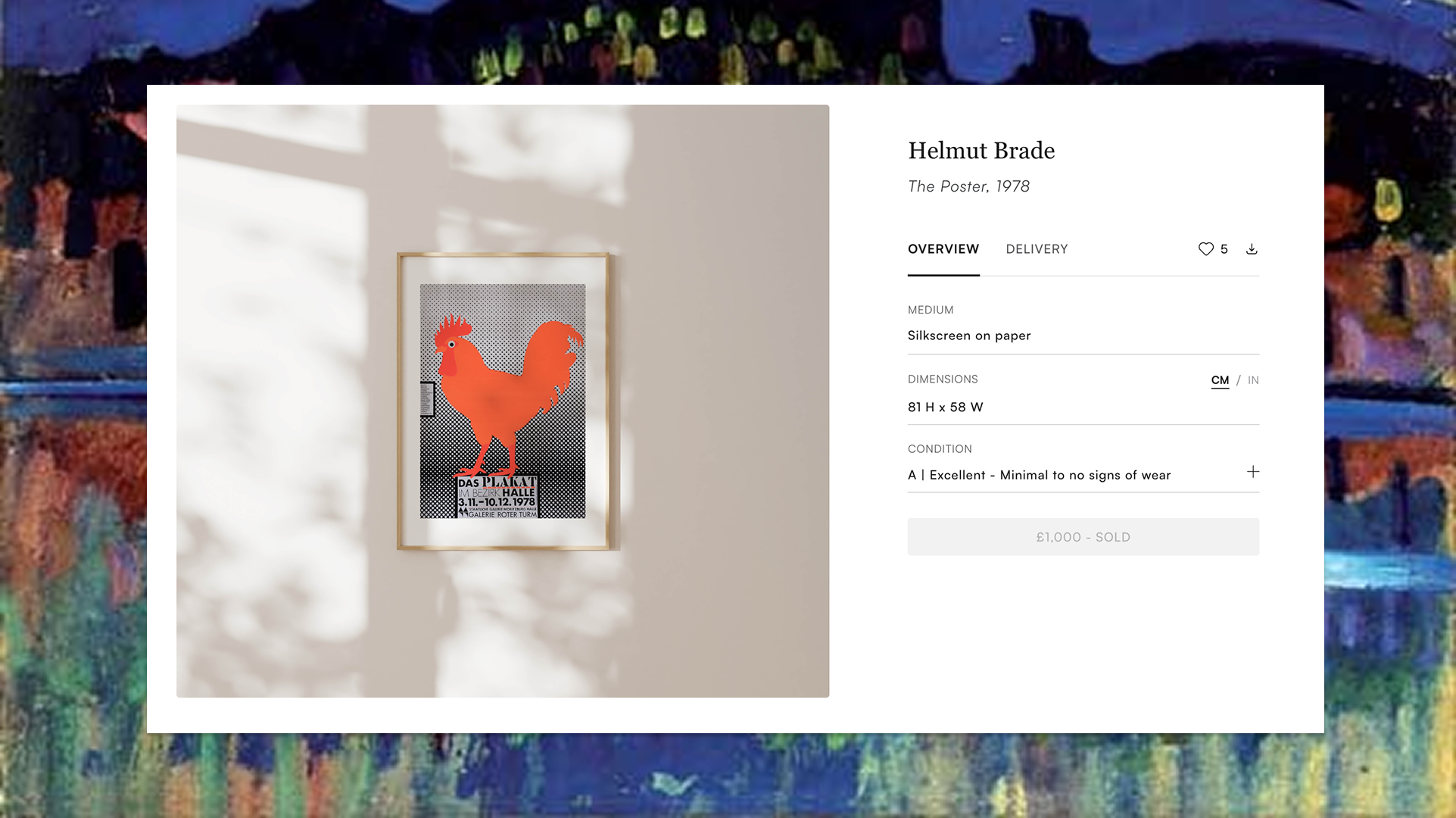
Keep sold works on your website, just mark them as sold.
The red dot in physical exhibitions exists to tell visitors a work has sold. Online, many dealers and galleries remove sold works from their websites. It makes the catalogue cleaner, but it removes one of the most important signals: proof of demand.
A sold work still has value after the sale. It shows collectors what other people have bought, gives context to an artist's work, and builds confidence in your shop or gallery.
There's also a practical benefit. A sold work can still help new collectors discover you. Its page gives search engines and AI tools information about the artist or designer, the work and your relationship to both.
The more useful information you publish about an artist, the more chances you have to appear when someone searches for them or asks an AI tool about their work. In 2026, 22% of collectors used apps or AI tools, up from 4% in 2024 (Art Basel & UBS Survey of Global Collecting 2026).
On a KANDINSKY website, a sold work keeps its page, with a red dot and SOLD next to the price.
Show interest in real time
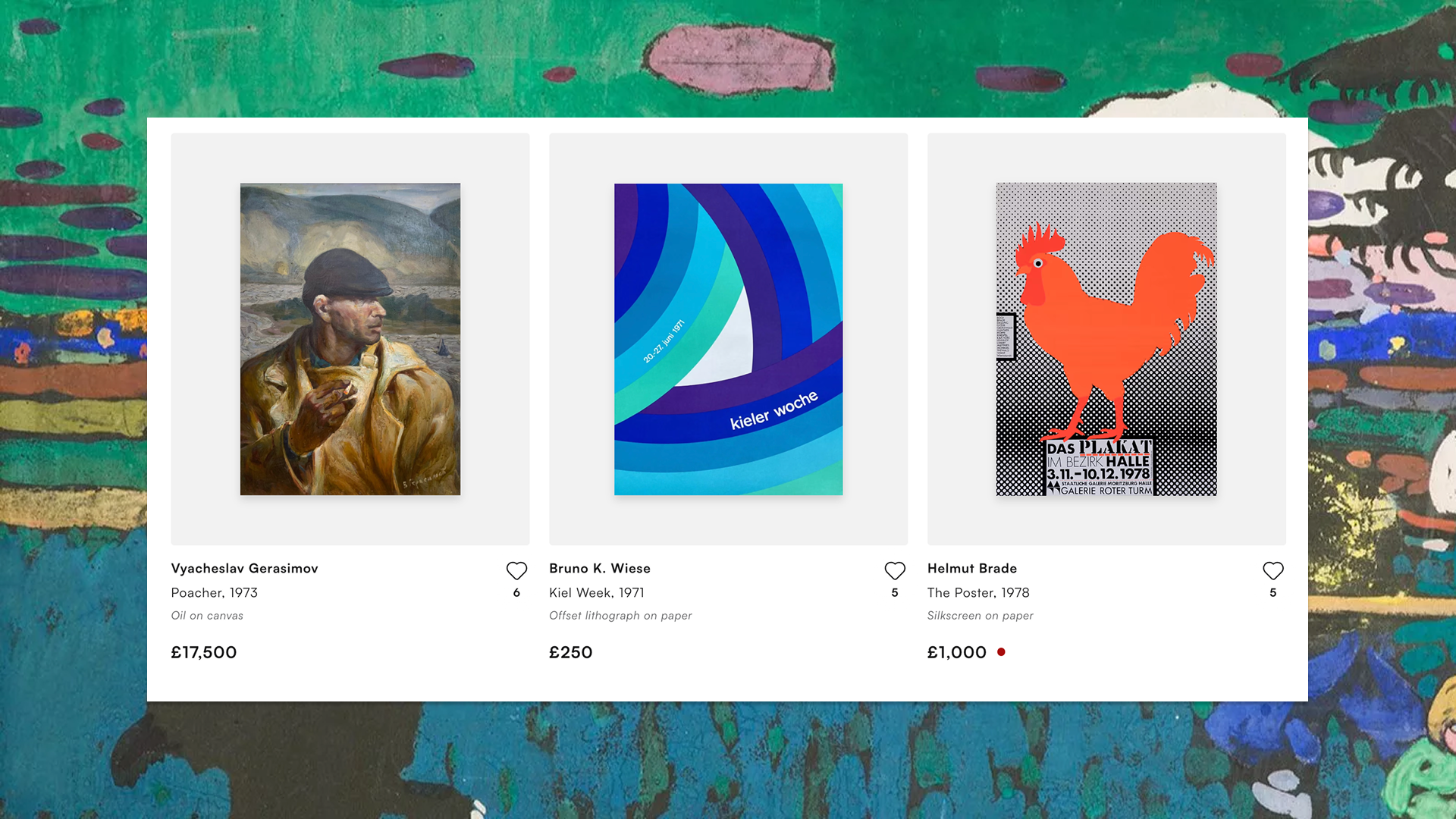
Show how many collectors have saved each work.
Past sales show collectors have bought an artist's work. But there's another signal worth showing: who's interested right now.
In a physical gallery, you can see this happening. Collectors gather around a particular work, return to look at it again or ask the dealer about it. Online, these signals are hidden. Someone might save a work to their wishlist or email you about it, but other visitors have no way of knowing.
Make that interest visible. Show how many times a work has been saved by displaying the count next to the heart icon.
There's evidence that visible popularity influences what people choose. In an experiment involving 14,341 participants, songs became more popular when listeners could see how many times others had downloaded them (Salganik, Dodds & Watts, Science, 2006).
The same principle applies to art. If three collectors have saved a painting, the next visitor can see that they're not the only one interested. What was previously private information becomes a visible signal of demand.
KANDINSKY shows the save count next to the heart on every work, and links each view and save to the customer's profile in your contacts.
Show future demand
Let collectors see that others are waiting for a work, or that it's reserved.
Dealers and galleries often keep waitlists for works or artists, but this usually stays private. You can do the same online, for a single work or a whole artist. A "Join waitlist" option makes that demand visible without revealing who is waiting.
Reservations work in a similar way. Showing that a work is reserved tells other collectors someone is already interested, while giving them the option to join the waitlist if the sale doesn't go through.
You can also show demand before a work is available. Mark upcoming works "available next week" or "new works by this artist coming soon". Pre-orders let collectors register their interest in an edition or work before it's released.
In KANDINSKY, a reserved work shows a blue dot and RESERVED on your website. You can also create saved searches for custoemrs, and when when a new work enters your inventory, you're notified and can call them first.
Deadlines encourage action
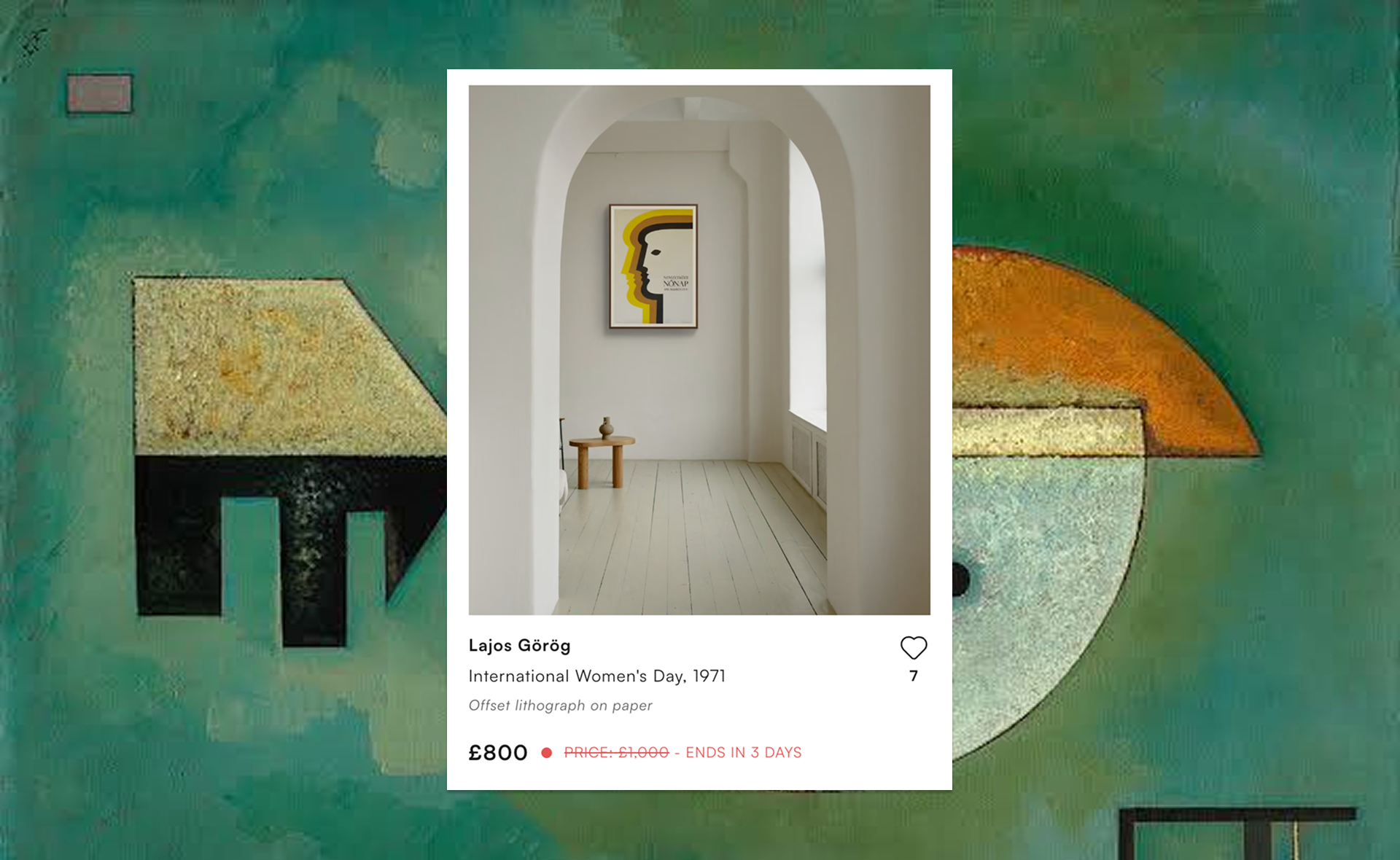
A time-limited discount gives collectors a reason to act.
In person, a dealer can offer a lower price and explain that it's only available for a few days. Online, you need to make that deadline just as clear.
Take a page from the retail playbook. Show the discounted price, the original price and exactly when the offer ends. You can also use this for private offers, giving an individual collector a lower price on a work they've shown interest in, with a deadline to accept it.
The deadline must be genuine. Fake countdowns and manufactured urgency damage trust. They can also break the law. In the EU, the Unfair Commercial Practices Directive prohibits falsely claiming that a product is available at a particular price for a very limited time.
At COMRADE, I discount selectively. I put a small number of works on sale rather than discounting the entire collection. Constant discounting makes art feel like a commodity. A discount should give someone a reason to act on a work they already want, not make your whole catalogue feel like it's permanently on sale.
With KANDINSKY, you can add a discount and set its expiry date. Your website displays the original price crossed out, the discounted price and a message such as "Ends in 3 days".
For individual collectors, you can create a private room, add selected works, set a private discount and choose when access expires.
FAQ
How do I create urgency when selling art online?
Show the scarcity that already exists. Keep sold works visible, show how many collectors have saved a work, show waitlists and reservations, and give discounts a real deadline. Don't invent urgency: fake countdowns damage trust.
Should I remove sold works from my website?
No. A sold work is proof of demand. It shows collectors what others have bought and builds confidence in your shop or gallery. Its page also helps search engines and AI tools find you when someone looks up that artist.
Should I show how many people saved a work?
Yes. If three collectors have saved a work, a fourth knows they're not the only one considering it. Show the number next to the heart icon.
Are countdowns and limited-time offers allowed?
Only if the deadline is real. In the EU, falsely stating that a product is only available for a very limited time is banned under the Unfair Commercial Practices Directive. Fake deadlines also damage trust.
How often should I discount art?
Rarely, and only a few works at a time. Constant discounting can make art feel like a commodity. A discount should give a collector a reason to act on a work they already like.